







Introducing ads in ChatGPT. Implications for Marketers.
Estimated Reading Time: 5 minutes
- OpenAI is introducing ads in ChatGPT, focusing on Free and Go users.
- The ads are contextually relevant and integrated within conversations.
- This model emphasizes intent over user data, allowing smaller brands to compete.
- Early adoption offers unique marketing opportunities with minimal competition.
- Octogamma is launching a GPT Ads strategy leveraging this new channel.
Table of Contents
- The Official Launch of ChatGPT ads.
- Where Ads Appear. Placements
- Targeting in ChatGPT ads. Intent Over Interest
- Marketing Opportunities With OpenAI Ads
- The Market Implications: A New Distribution Channel Emerges
- The Rise of Octogamma: Pioneering GPT Ads Strategy
- Practical Takeaways for Founders and C-Level Professionals
- Conclusion: The Future Is Now
The Official Launch of ChatGPT ads.
OpenAI recently announced that it has officially begun showcasing ads in ChatGPT, primarily targeting Free and Go users, with the initial rollout focused on the US market. This initiative signifies a shift in how users interact with AI tools, merging conversational assistance with a tailored advertising experience. However, it’s essential to note that, for now, there isn’t a public self-serve ad platform available. Instead, OpenAI is managing this rollout directly, which allows for curated control over ad placements and user experience.
This may be a nascent offering from OpenAI, but its potential impact is simply colossal. With 800 million weekly active users engaging with ChatGPT, the opportunity to reach these high-intent individuals during critical moments of reasoning and evaluation cannot be overstated.
Where Ads Appear. Placements
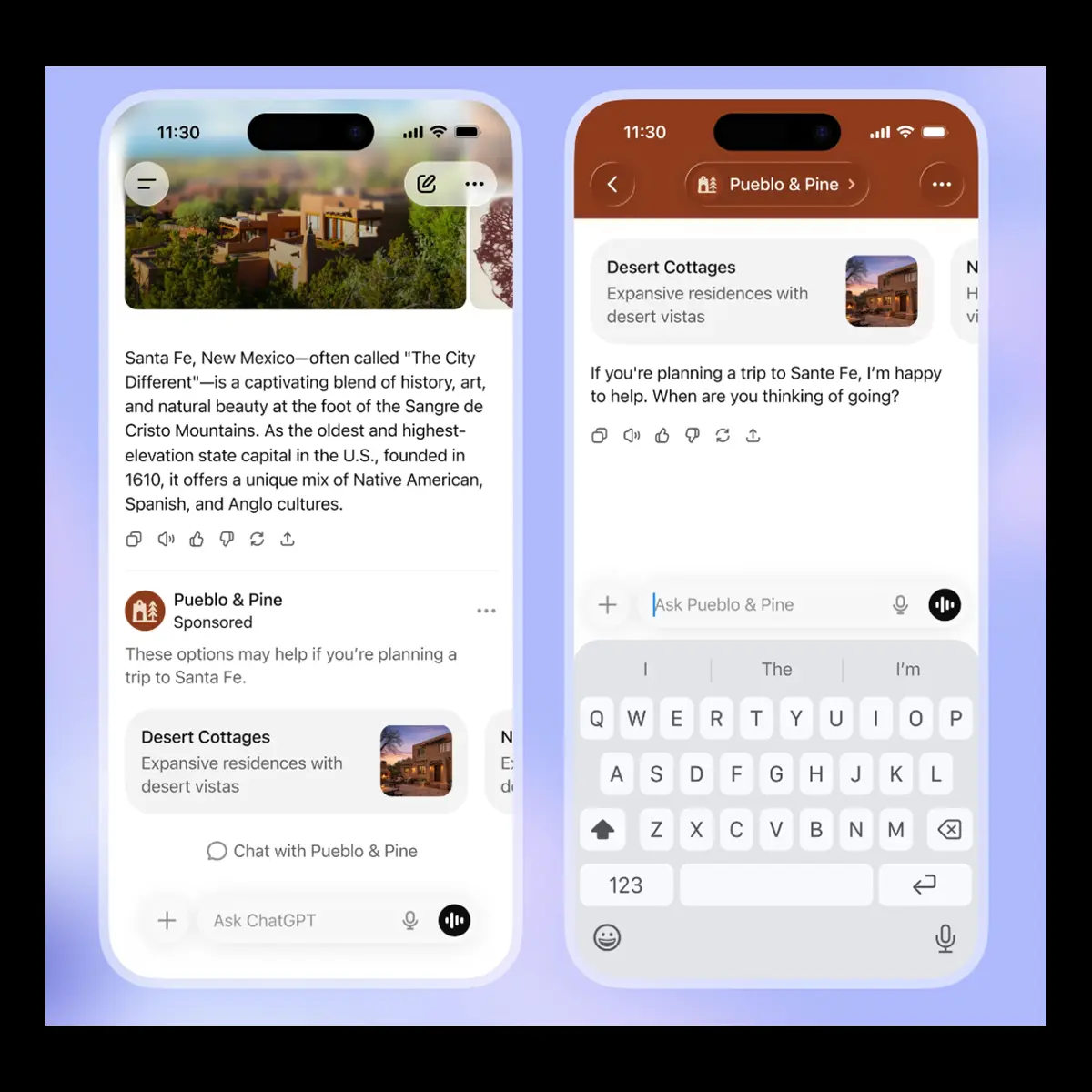
Advertising in chatgpt will appear seamlessly integrated within the interface, clearly demarcated from AI-generated responses. This contextual positioning holds significant value; instead of feeling intrusive — as is often the case with traditional advertising — ads in this setting provide information relevant to the ongoing conversation.
Imagine this scenario: a user asks ChatGPT about recommendations for the best graphic design software, and right alongside the AI’s thorough response, they see contextual ads for design tools. This not only enhances user engagement but also ensures that marketers can connect their products with potential customers right when they’re hungry for solutions.
Targeting in ChatGPT ads. Intent Over Interest
In a move that distinguishes it from traditional advertising models, OpenAI’s advertising framework emphasizes intent and context-based targeting. The mechanics resemble search advertising more than social targeting; ads are presented based on the topic of conversation rather than extensive user data. Importantly, there’s no use of third-party data, nor is there any form of interest targeting or retargeting.
This intentional focus allows brands to reach consumers in a more organic manner. It prioritizes message quality and relevance rather than budget size, allowing smaller players to compete effectively. Brands that can craft compelling messages with authenticity and value stand a better chance of resonating with audiences than those that simply outspend their competitors.
Marketing Opportunities With OpenAI Ads
The launch by OpenAI of this advertising model represents a monumental marketing opportunity. For one, it grants access to high-intent users precisely at the moment they’re evaluating products and making decisions. Unlike traditional ad formats that interrupt the consumer journey, ads in ChatGPT arrive during active reasoning and evaluation stages.
Moreover, during this early rollout phase, competition is relatively minimal, making it an opportune moment for brands to experiment and refine their messaging. There are no established benchmarks or a saturated bidding environment yet; therefore, the companies that are able to respond agilely and learn from the early days of this model will benefit immensely.
Interestingly, this could signal a shift away from interruption-based advertising tactics toward intent-driven discovery.
What ChatGPT Ads Mean for Brands
The most significant implication of OpenAI’s ad launch is the creation of an AI-native distribution channel. For forward-thinking brands, this represents a first-mover advantage. By testing campaigns in this uncharted territory, businesses can shape the standards and playbooks that will define best practices.
There’s a palpable eagerness within the marketing community to explore what an AI-integrated advertising system can accomplish and how it can redefine marketing strategies moving forward. The early adopters of this model could very well set the stage for how interactions between brands and consumers evolve in the digital landscape.
How to create ads in ChatGPT
Creating ads in ChatGPT is currently very different from launching campaigns on traditional ad platforms. There is no public self-serve dashboard yet. Instead, advertising in ChatGPT is being rolled out in a controlled testing phase managed directly by OpenAI. Ads are placed contextually within conversations and triggered by user intent rather than demographics or third-party data. To participate, brands typically need to work through early-access programs or experienced partners who understand how to align messaging with conversational intent. Success depends less on bidding tactics and more on crafting highly relevant, problem-aware messages that naturally match what users are asking ChatGPT at the moment of decision.c
Octogamma offers GPT Ads services for Brands
Here’s where we get really excited! At Octogamma, we’re rolling out our own GPT Ads strategy and execution service. We’re currently in the testing phase of our first GPT Ads campaigns, and we’re thrilled to offer these unique advertising capabilities to our clients. Our approach focuses on context-driven ad positioning, prioritizing intent over traditional targeting methods.
With our 14 years of marketing expertise, we are exceptionally well-positioned to help forward-thinking companies utilize this dynamic new ad channel — and believe us, it’s hot! Early access GPT ad experiments will allow ambitious businesses to launch effective campaigns before the market gets crowded.
If you’re eager to dive into the world of GPT Ads and harness this opportunity for your tech project, let’s talk. Our team can help you navigate this groundbreaking terrain successfully.
Ready to improve your marketing with AI?
Practical Takeaways for Founders and C-Level Professionals
- Experiment Early. The sooner you test ads in ChatGPT, the better your chances of establishing benchmarks and best practices.
- Craft Quality Messages. Given the intent-driven approach of this new advertising model, focus on delivering value and authenticity in your messaging rather than purely relying on a high budget.
- Monitor Trends. Keep a pulse on how this model evolves. Ad platforms are rarely static, and adjusting your strategies to align with changes is crucial.
- Seek Expert Support. If navigating this new landscape feels overwhelming, don’t hesitate to consult with experienced teams like Octogamma that specialize in marketing, acquisition, leadgeneration channels, and AI.
Conclusion. The Future Is Now
The launch of advertising within ChatGPT presents not just a new platform but an entire paradigm shift in how brands engage with audiences. It emphasizes the need for relevance, context, and quality messaging. For CEOs, CMOs, and COOs navigating tech projects, understanding these shifts is essential.
Our take? The time to act is now. Be one of the first to explore this uncharted territory of AI advertising. If you’re interested in unlocking the potential behind GPT Ads, reach out to us at Octogamma. Let’s harness this opportunity together and shape the future of marketing.
FAQ Section
Q: How can my business start advertising on ChatGPT?
A: Currently, OpenAI is managing the rollout of ad placements directly. Businesses interested in participating should reach out to OpenAI for more details.
Q: What types of businesses can benefit from this advertising model?
A: Any business aiming to reach high-intent users during their decision-making journey can benefit, especially those that can craft contextually relevant messages.
Q: Are there any costs associated with advertising on ChatGPT?
A: Specific cost structures have not been publicly disclosed yet, as OpenAI is managing the rollout directly.
Q: How does targeting work in this new model?
A: The advertising model emphasizes intent and context-based targeting rather than extensive user data or interest targeting.