Perplexity Computer is a cloud-based platform designed to coordinate multiple specialised artificial intelligence models; the primary business proposition is realised when executives evaluate perplexity ai computer use for complex, multi-step tasks that require research, synthesis and autonomous execution. It orchestrates a portfolio of models and integrations to perform end-to-end workflows rather than acting as a single, conversational chatbot.
Category: Perplexity Computer is an agentic AI orchestration platform positioned for enterprise and professional use, bridging AI research, automation and operational execution. It layers model selection, task decomposition and integrations into a single product aimed at teams that need repeatable, accountable AI-driven workstreams.
Context: Launched by Perplexity AI and delivered as a cloud service, the product combines web search, persistent memory and automated agents to run workflows for hours or months. It targets scenarios where manual handoffs between tools are the limiting factor for scale and speed.
Strategic TL;DR: Perplexity Computer replaces ad hoc multi-tool approaches with model-level orchestration that reduces cycle time for research, reporting and operational projects. For CEOs and CMOs it is valuable where decision speed, reproducibility and integration with existing software stacks matter most.
Key insights
Perplexity Computer orchestrates approximately 19 specialised AI models to match tasks with the most suitable model capability.
The platform supports 400+ app integrations, enabling direct connections to email, project management, data stores and analytics pipelines.
Perplexity offers a Pro/Max-style subscription model; Perplexity Max is positioned at around $200/month for advanced features.
It is cloud-hosted and designed for persistent memory, enabling cross-session context retention for multi-week projects.
Typical workflow durations range from hours to months, supporting both short tactical tasks and longer strategic analysis projects.
Perplexity Computer is optimised for enterprise decision-support and project execution rather than casual chat interactions.
Strategic TL;DR
Perplexity Computer organises multiple AI models and app integrations into autonomous workflows so businesses can deliver repeatable, measurable outputs without manual coordination. The strategic value lies in compressing time-to-insight, automating end-to-end processes and embedding AI into existing operational systems.
When to use Perplexity Computer: deploy it for high-value, multi-step projects such as market entry research, competitive intelligence, product launch orchestration and data-driven reporting. If you operate in industries that require documented decision trails and reproducible workflows, Perplexity Computer materially reduces operational overhead.
Business Problems It Solves
Perplexity Computer addresses fragmentation between models, tools and human workstreams by providing orchestration, automation and persistent context. It reduces manual switching, accelerates complex analyses and establishes accountable AI-driven processes.
Problem: Time wasted switching between specialised models and tools. Solution: Automatic model routing and parallel agent execution.
Problem: Inconsistent research quality and non-reproducible outputs. Solution: Persistent memory and workflow versioning for auditability.
Problem: Operational friction integrating AI into existing software. Solution: Pre-built connectors and API integrations to embed outputs into systems of record.
Problem: High latency for multi-step tasks (research → synthesis → execution). Solution: End-to-end orchestration that executes steps autonomously and in parallel where feasible.
Core Features
The following features are described as direct business outcomes; each explanation focuses on operational and strategic improvements relevant to CEOs, Founders and CMOs.
Multi-model orchestration
Business Value: Routes subtasks to the most capable model (reasoning, long-context research, code generation), which improves accuracy and reduces manual rework; this enables teams to complete complex assignments faster with fewer human reviews.
Autonomous workflow execution
Business Value: Executes multi-step processes without continuous human intervention, shrinking project timelines and lowering operational labour costs for routine and semi-complex projects such as competitive analysis or recurring reporting.
Persistent memory and context retention
Business Value: Retains project context, user preferences and file links across sessions to ensure continuity over long projects, reduce redundancy and provide an audit trail for compliance-sensitive decisions.
400+ app integrations
Business Value: Direct integrations with email, CRM, project management and analytics tools allow outputs to be pushed into business workflows, improving handoffs, adoption and measurable impact on KPIs.
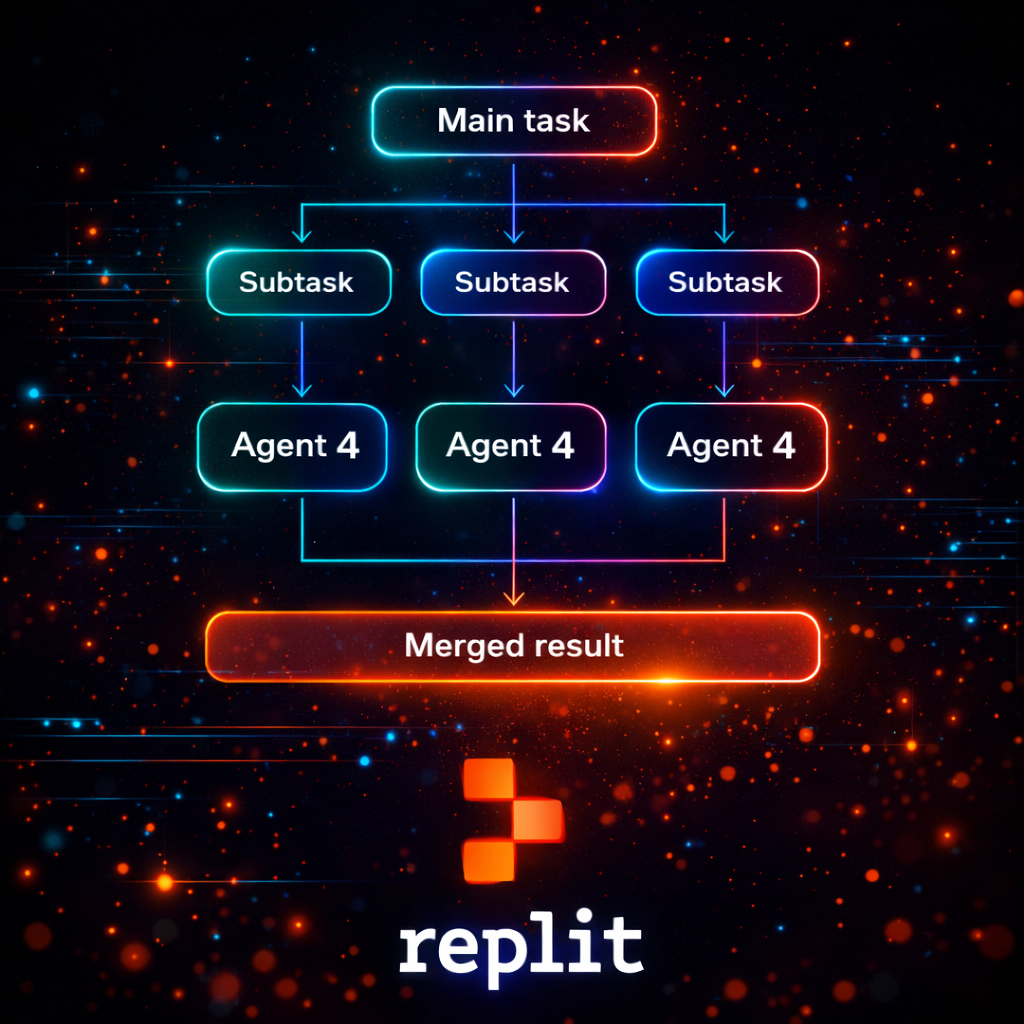
Parallel sub-agent processing
Business Value: Runs multiple sub-agents concurrently to accelerate throughput on large projects (for example, simultaneous data extraction, interview summarisation and draft generation), delivering faster time-to-insight for executive decisions.
Search and web sourcing
Business Value: Real-time web search and citation capture improve the defensibility of research outputs and reduce the time spent validating sources, critical for investor materials, regulatory filings and competitive intelligence.
Workflow monitoring and failure recovery
Business Value: Built-in monitoring and retry logic reduce latent failure costs and preserve project continuity; this lowers the risk of incomplete deliverables and supports operational SLAs for business-critical tasks.
Main Strategic Use Cases
Perplexity Computer suits strategic projects that combine research, synthesis and execution across departments. It is most effective where outputs feed board-level decisions, investor communications or high-stakes product launches.
Market entry assessment: rapid, repeatable competitor mapping, cost modelling and regulatory summarisation with a single orchestrated workflow.
M&A diligence pre-screening: automated synthesis of public filings, sentiment analysis and red-flag extraction to reduce analyst hours and accelerate deal screening.
Product strategy and roadmapping: collect user research, quantify feature demand, model outcomes and produce stakeholder-ready executive briefs.
Investor relations and fundraising: generate investor decks, Q&A prep and data-driven market narratives with traceable source citations and version control.
Business Operations Use Cases
Operationally, Perplexity Computer automates repeatable business processes that historically required cross-team handoffs and manual consolidation.
Finance and analytics: automated monthly reporting, anomaly detection and narrative generation fed directly into BI tools.
Legal and compliance pre-screening: synthesise statutes, flag clauses and prepare human-reviewed summaries to streamline counsel time.
Engineering enablement: orchestrate code audits, generate test plans and prepare deployment checklists coordinating multiple AI models for code understanding and generation.
Perplexity Computer competes in a space that includes agent platforms, research-first AI tools and emerging multi-model orchestrators. Open Claw is a direct comparison point and represents a different architectural and business choice.
Decision-help: If you operate in a regulated industry where on-premises control is mandatory, consider alternatives that offer local hosting or stricter data residency. For businesses that prioritise speed of integration and cloud-native orchestration, Perplexity Computer is likely a better fit.
Perplexity Computer vs Open Claw
Decision factor
Perplexity Computer
Open Claw
Orchestration scope
Orchestrates ~19 specialised models with automatic routing and persistent memory for long projects.
Tends to focus on agentic task execution with a smaller or different model mix; design philosophies vary by provider.
Integration maturity
400+ app integrations aimed at embedding outputs into enterprise workflows.
Integration breadth may be narrower; often requires custom connectors for enterprise systems.
Automation level
Designed for end-to-end autonomous workflows with monitoring and recovery.
Often emphasises agent autonomy but may require more manual orchestration or scripting.
Use-case fit
Best for research-led projects, cross-functional execution and documented decision support.
Better suited to point automation tasks or tightly scoped agent experiments.
Scalability
Cloud-native, supports hundreds of simultaneous projects with persistent context.
Scalability varies; some providers optimise for lightweight agents at scale rather than deep, persistent workflows.
Data governance
Cloud-based with enterprise controls; assess controls for sensitive data and compliance needs.
May offer different governance models; check for on-prem or VPC options if data residency is required.
Cost model
Subscription tiers (Perplexity Max ≈ $200/month) with enterprise options; evaluate per-workflow compute costs.
Pricing and commercial terms differ; often variable based on agent runs and custom deployments.
Misconceptions and Myths
Mistake: Perplexity Computer is just another chatbot.
Correction: It is an orchestration platform that combines multiple specialised models and integrations to run autonomous workflows rather than handling single-turn conversational queries.
Mistake: Multi-model systems always yield better results.
Correction: Multi-model orchestration increases capability but also introduces coordination complexity and new failure modes; simple tasks may be faster and cheaper on a single, well-calibrated model.
Mistake: Persistent memory means unlimited data retention.
Correction: Persistent memory preserves context for continuity, but retention policies, access controls and compliance constraints determine how long and what data can be stored.
Mistake: Integrations remove the need for human oversight.
Correction: Integrations accelerate handoffs but human governance remains essential for validation, especially where legal, financial or reputational risk is present.
Mistake: Perplexity Computer replaces all automation tools like Zapier.
Correction: It complements general automation platforms by adding AI model orchestration and research capabilities; traditional automation tools remain valuable for high-throughput, deterministic tasks.
Mistake: The platform is inherently enterprise-ready out of the box.
Correction: It provides enterprise-oriented features but organisations must still evaluate security, data governance and operational processes prior to large-scale deployment.
Key Definitions
Agentic AI
An approach where AI systems perform tasks autonomously by planning, executing and iterating without continuous human direction; useful for multi-step workflows.
Multi-model orchestration
The automated selection and coordination of multiple specialised AI models to perform different subtasks within a larger workflow, optimising for capability and cost.
Persistent memory
A system capability that retains project context, user preferences and past outputs across sessions to maintain continuity and improve reproducibility.
Sub-agent
A discrete autonomous process within an orchestration framework assigned to perform a specific subtask, which can run in parallel with other sub-agents.
Workflow recovery
Mechanisms that detect failures, retry operations or escalate for human intervention to preserve end-to-end task completion and reliability.
Frequently Asked Questions
What exactly does Perplexity Computer do?
Perplexity Computer orchestrates multiple specialised AI models and app integrations to execute complex, multi-step workflows with persistent context. It automates research, synthesis and parts of execution while integrating outputs into existing business systems.
How is Perplexity Computer different from regular AI chatbots?
Unlike single-model chatbots designed for conversational interaction, Perplexity Computer coordinates several models, runs parallel sub-agents, retains memory across sessions and connects to enterprise apps for end-to-end project execution.
Who should consider adopting Perplexity Computer?
For businesses that need faster, reproducible decision support—especially in research-heavy or cross-functional projects—CEOs, Founders and CMOs will find the platform valuable. If you operate in regulated industries, evaluate governance capabilities before deployment.
How does multi-model orchestration select which model to use?
Orchestration evaluates task characteristics—such as reasoning complexity, context length and output form—and routes subtasks to the model specialised for that role, with parallel execution used where beneficial.
Can Perplexity Computer access company files and systems?
Yes, via integrations and connectors; the platform can access permitted files and push outputs into CRMs, project tools and storage systems subject to the organisation’s access controls and policies.
What are the main limitations and failure modes?
Limitations include coordination complexity, potential for inconsistent outputs across models, latency for long workflows and the need for governance to manage data privacy and correctness. Failure modes often manifest as misrouted subtasks or incomplete workflows that require human intervention.
How should teams measure ROI?
Measure ROI by comparing time-to-insight, hours saved on repeatable tasks, reduction in manual handoffs, and impact on decision speed or revenue-related outcomes. Pilot projects with clear KPIs are advised before enterprise rollout.
When should you not use Perplexity Computer?
Avoid when tasks are simple, deterministic and cheaper to automate with traditional integration tools, or where data residency demands prohibit cloud-based processing. For small, single-step tasks, single-model solutions may be more efficient.
Category :
AI Tools
Share This :
Posted On :
March 3, 2026
Author:INNA CHERNIKOVA
Marketing leader with 12+ years of experience applying a T-shaped, data-driven approach to building and executing marketing strategies. Inna has led marketing teams for fast-growing international startups in fintech (securities, payments, CEX, Web3, DeFi, blockchain, crypto), AI, IT, and advertising, with experience across B2B, SaaS, B2C, marketplaces, and service providers.
Contact us to collaborate on personalized campaigns that boost efficiency, target your ideal audience, and increase ROI. Let’s work together to achieve your digital goals.