



Estimated reading time: 12 minutes
What is GitHub Copilot?
Copilot github is an AI-assisted programming tool that provides contextual code suggestions, autocompletes functions and generates boilerplate across many languages and frameworks. It operates as an extension to common development environments and surfaces code inferred from the surrounding file, comments and project context.
The product sits in the software development automation category as an AI pair-programmer and developer productivity platform. It is positioned between code editors and CI/CD pipelines, intended to reduce repetitive engineering work while accelerating feature delivery and prototyping.
Originally developed by GitHub in collaboration with OpenAI and powered by models derived from OpenAI Codex, GitHub Copilot was created to augment developer workflows rather than replace human decision-making. Typical deployment environments are developer workstations with Visual Studio Code or other supported editors and enterprise environments where policy, security and integrations are configured centrally.
For senior leaders, GitHub Copilot’s primary business value is pragmatic: it reduces time-to-market on software projects, raises the effective output per engineer on routine work and shortens feedback loops for product iteration. It is most valuable where speed of experimentation, consistent scaffolding and cross-language support materially affect product velocity.
Key insights
- GitHub Copilot provides contextual code suggestions and completions by analysing active files, comments and project context.
- Adoption typically increases developer throughput on repetitive tasks but requires governance to manage accuracy, security and licensing risk.
- Its business impact is realised through acceleration of prototyping, reduction in boilerplate effort and faster onboarding of junior engineers.
- Copilot is complementary to code review and automated testing; it is not a substitute for security scanning or architectural design decisions.
- Organisations must balance productivity gains against potential IP and licence exposure from large-scale code suggestion models.
Business Problems It Solves
GitHub Copilot addresses core engineering efficiency challenges that slow product and marketing-led engineering initiatives. It reduces friction where repetitive code, scaffolding and exploratory coding consume disproportionate time.
Reducing repetitive engineering work
Large portions of application delivery involve repeatable patterns: endpoints, data models, test scaffolding and integration stubs. Copilot automates these patterns so senior engineers can focus on design, architecture and critical path work.
Accelerating prototyping and experimentation
When product teams need rapid proof-of-concept or A/B test implementations, Copilot shortens the time to a working prototype and lowers the cost of iteration, enabling more hypotheses to be tested within the same engineering cadence.
Lowering onboarding time
New hires and contractors can be productive faster because Copilot offers contextual examples and suggestions that reflect repository patterns and idioms. This decreases ramp time for strategic hires and outsourced teams.
Supporting automation and auditable workflows
For teams evaluating auditable code automation, solutions such as OpenAI Codex CLI provide a complementary perspective on how AI can be introduced under controlled, auditable processes.
Core Features
These features translate technical capabilities into measurable business outcomes relevant to CEOs, Founders and CMOs.
Contextual code completion
Business Value: By suggesting function bodies, variable names and API calls based on surrounding code and comments, Copilot reduces cycle time for routine tasks, freeing senior engineers to work on high-impact design and product decisions.
Multi-language support
Business Value: Support for multiple languages and frameworks reduces the need for specialists on every small task, enabling cross-functional teams to prototype quickly and scale engineering capacity without linear hiring for each stack.
Boilerplate generation
Business Value: Generating tests, CI snippets and initial CRUD endpoints automates low-value work and standardises implementations across teams, lowering error rates and accelerating feature completion.
Inline documentation and examples
Business Value: When Copilot suggests code with inline patterns or idiomatic usage, it acts as an on-demand learning aid that lowers onboarding cost and reduces time spent in documentation lookups.
Editor integration and workflow acceleration
Business Value: Direct integration with tools such as Visual Studio Code minimises context switching, resulting in uninterrupted developer flow and measurable gains in throughput per sprint.
Customisation and policy controls
Business Value: Enterprise controls for usage, telemetry and data handling enable IT and security teams to align Copilot with company governance, which is critical for regulated sectors and enterprise adoption.
Main Strategic Use Cases
Copilot is strategically useful where speed, repeatability and developer experience are priority levers for business growth and cost control.
Product iteration and MVP acceleration
When to use it: use Copilot to accelerate minimum viable product (MVP) development and rapid iterations for new features. It reduces development cycles for experiments and early releases.
Platform and SDK development
If you operate in platform business models, Copilot helps create consistent SDKs, example apps and documentation faster, improving developer experience and shortening time-to-integration for partners.
Technical debt management and refactoring
For businesses that maintain large codebases, Copilot can assist with refactoring patterns and bulk edits, but its suggestions should be gated through reviews and automated tests to maintain architectural integrity.
Business Operations Use Cases
Operational teams and engineering managers will see direct lift in delivery cadence and operational consistency.
Automated test scaffolding
Copilot can produce unit and integration test templates, increasing test coverage velocity and supporting CI-driven quality gates without adding significant manual effort.
Internal tools and automation scripts
For internal tooling—deployment scripts, data pipelines and monitoring utilities—Copilot accelerates delivery and maintenance, enabling operations teams to build automations faster.
Standards enforcement through templates
Using repository templates suggested or created with Copilot helps enforce company standards and reduces variance across engineering teams, lowering maintenance costs.
Marketing Use Cases
Marketing and growth teams can leverage Copilot indirectly by shortening engineering lead times and enabling more rapid experimentation.
Landing page and experiment backends
When marketing needs landing pages, feature flags or lightweight backends for campaigns, Copilot helps accelerate delivery so experiments run sooner and marketing KPIs are validated faster.
Data extraction and analytics connectors
Copilot can produce connectors and small ETL scripts to surface campaign data more quickly, improving time-to-insight for growth experiments and creatives.
Repurposing creative assets and automating content pipelines can tie into engineering workflows; teams focused on content operations can accelerate processes by combining developer automation with approaches like Repurpose Video Content techniques.
Ready to improve your marketing with AI?
Let’s discuss how AI workflows and agents can save hours every week, lower acquisition costs, and upgrade the quality of your marketing execution.
Alternatives and Competitor Tools
When selecting a code-assist tool, the real question is not only which assistant writes code faster. The better question is: where does the tool fit inside your engineering workflow, cloud stack, governance model, security requirements, and developer adoption habits?
Cursor
Cursor is the most direct GitHub Copilot competitor. It is best for teams that want an AI-native editor rather than an assistant layered on top of an existing IDE.
Cursor is especially relevant for multi-file changes, codebase-wide reasoning, natural-language edits, debugging, and agent-style development workflows. For a deeper breakdown of how Cursor works as an AI-native development environment, read Cursor AI Code Editor.
Windsurf
Windsurf is relevant for teams that want AI coding assistance with stronger emphasis on repository-aware workflows, collaboration, and controlled engineering processes.
It is a good fit when the organisation needs AI-assisted development but still wants structured delivery, team coordination, and predictable codebase-level execution. If governance, CI/CD alignment, and repository awareness are key decision factors, see Windsurf AI Code Editor.
Claude Code
Claude Code is relevant when teams want a more agentic coding workflow.
Instead of only suggesting code inside an editor, it can support larger development tasks, reason through codebase changes, edit files, run commands, and help with debugging. For teams evaluating agentic coding beyond autocomplete, read What is Claude Code?.
Amazon Q Developer
Amazon Q Developer is most relevant for AWS-first teams that need code assistance aligned with AWS services, SDKs, cloud operations, command-line workflows, troubleshooting, and security scanning. It is less of a universal Copilot replacement and more of a strategic fit for teams already standardised around AWS.
Tabnine
Tabnine is still one of the most relevant alternatives for organisations that prioritise privacy, IP protection, and deployment control.
Its strongest fit is not “faster coding at any cost,” but enterprise environments where code ownership, data residency, self-hosting, and compliance are decisive.
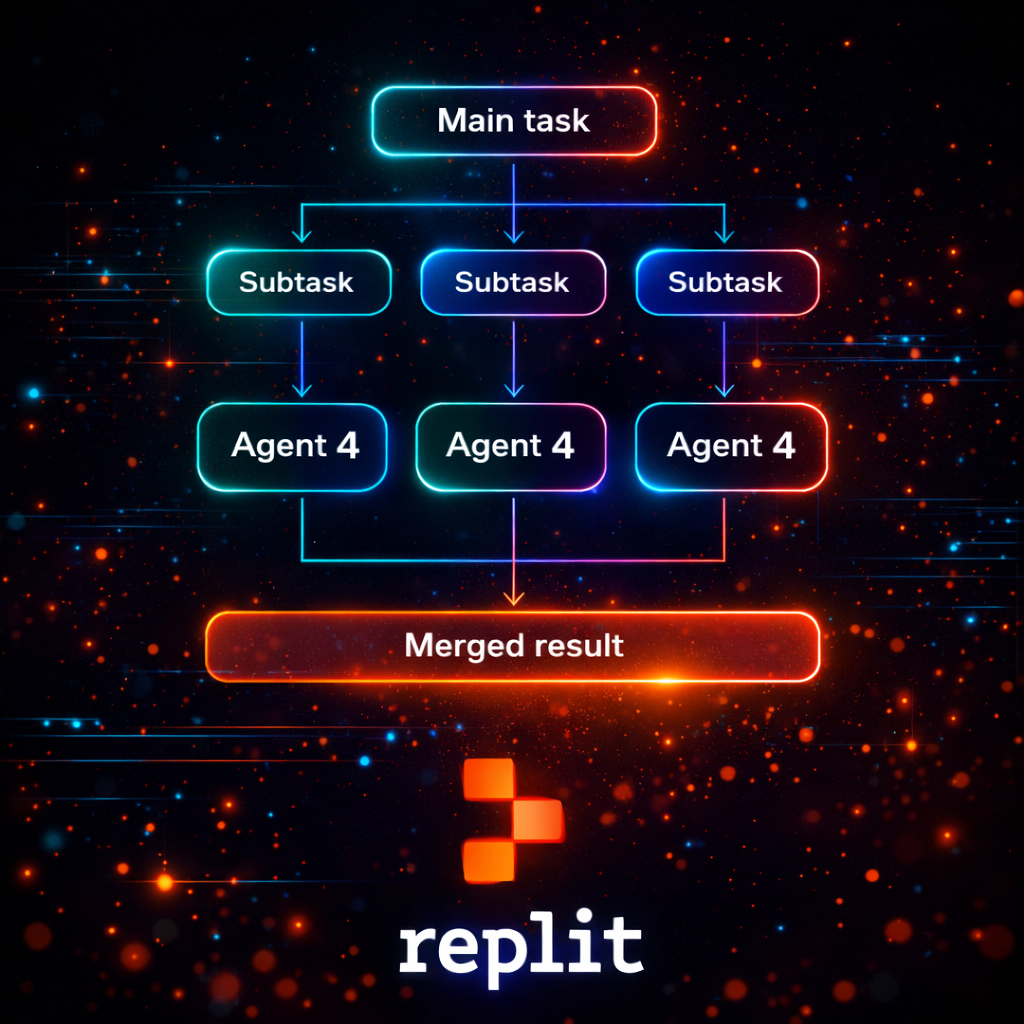
Replit Agent
Replit Agent isa browser-based environment for turning ideas into apps from plain language.
It is not the closest GitHub Copilot competitor for professional engineering teams, but it is useful for prototypes, small teams, education, non-technical builders, and fast web app creation. For a more business-focused view, see What is Replit AI?.
Open-source and local model approaches
Open-source and local model approaches remain relevant when auditability, data sovereignty, internal infrastructure control, or regulatory constraints make cloud-hosted AI coding tools difficult to approve.
They usually require more engineering ownership, but they can be the right choice for regulated teams that need full control over inference, logs, model access, and code exposure. For a related view on local, auditable code automation, read OpenAI Codex CLI.
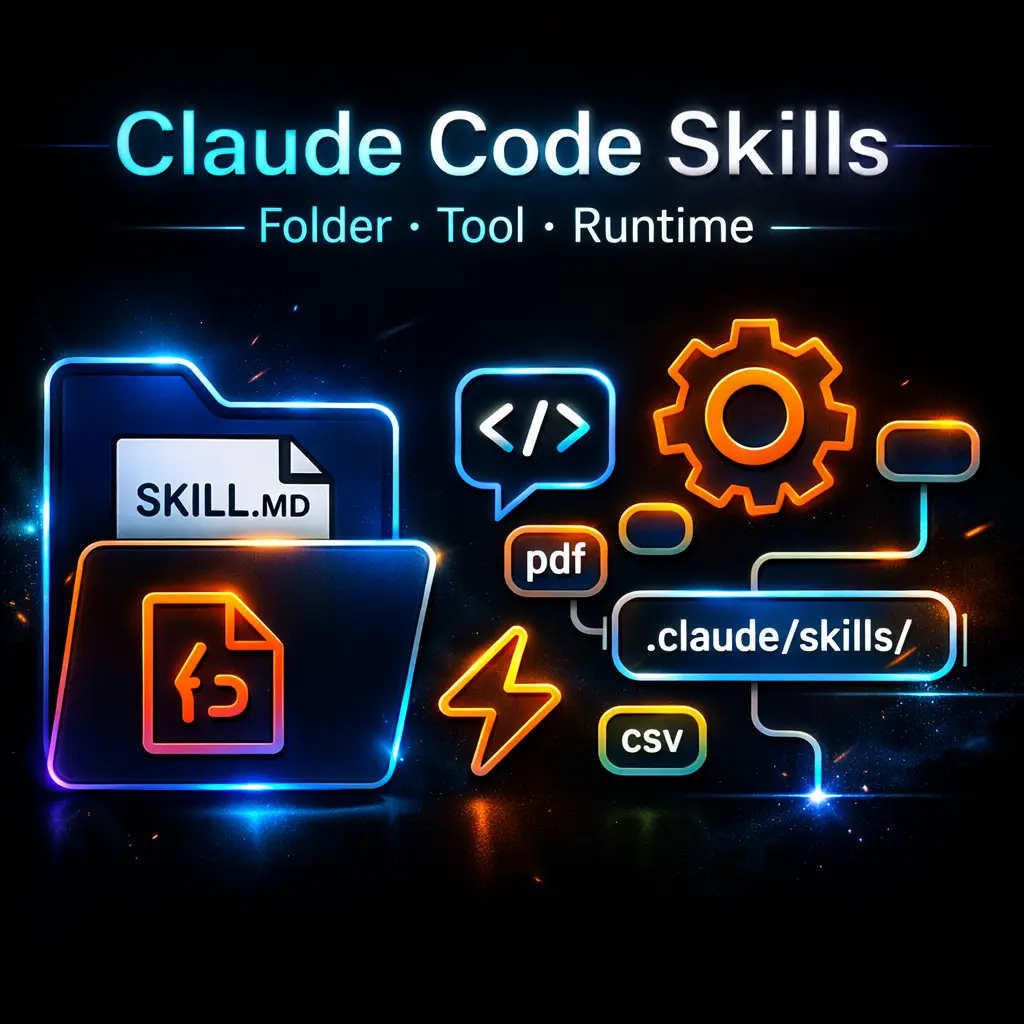
Teams that want to turn AI coding workflows into repeatable internal playbooks can also explore Claude Code Skills Explained, especially when governance, reusable workflows, and team-level standardisation matter.
Comparison: GitHub Copilot vs Cursor
| Decision Factor | GitHub Copilot | Cursor |
|---|---|---|
| Core operating model | AI coding assistant embedded into existing IDEs, GitHub, CLI, terminal, and pull request workflows | AI-native code editor built around codebase understanding, chat, multi-file edits, and agentic coding |
| Where it creates the most value | Accelerates developers inside their current GitHub-based workflow without forcing a new editor | Helps teams move faster when they are ready to work inside an AI-first development environment |
| Best use case fit | Autocomplete, code suggestions, PR descriptions, code review support, CLI help, and GitHub workflow acceleration | Multi-file refactoring, codebase-wide reasoning, agent-led changes, debugging, and natural-language editing |
| Context strength | Strong inside GitHub and supported IDE workflows, especially when connected to repositories, pull requests, and Copilot Spaces | Stronger for editor-level codebase context, cross-file understanding, and asking the AI to make larger changes directly |
| Automation style | Suggestions, chat, code review, CLI support, and agentic workflows for planning, making changes, and creating pull requests | Agent mode can complete coding tasks end-to-end while keeping developers in the loop |
| Workflow disruption | Lower: works inside VS Code, JetBrains, GitHub, terminal, CLI, and existing engineering workflows | Higher: teams usually need to adopt Cursor as their main editor to get the full benefit |
| Enterprise fit | Stronger fit for companies already standardised on GitHub, with plans for organisations and enterprise workflows | Strong for teams that prioritise AI-native coding velocity, but adoption may require editor migration and workflow change |
| Best measured by | PR throughput, boilerplate reduction, code review efficiency, onboarding speed, and developer productivity inside GitHub workflows | Refactor speed, debugging speed, multi-file change velocity, feature cycle time, and reduced context switching |
| Best for | Teams that want broad AI assistance across existing development tools without changing their stack | Teams that want a more aggressive AI coding environment where the editor itself becomes the AI workspace |
| Strategic trade-off | More ecosystem stability and lower adoption friction, but less AI-native editor depth | More AI-native power and codebase-level action, but more dependency on a new editor workflow |
GitHub describes Copilot as an AI coding assistant available across IDEs, GitHub, GitHub Mobile, terminal, CLI, and pull request workflows, with features including inline suggestions, chat, pull request summaries, code review support, and agentic workflows for planning and code changes. 🔗 GitHub Copilot features
Cursor positions itself as an AI-powered code editor that understands the codebase, supports natural-language code changes, multi-line edits, cross-file context, and agent mode for completing coding tasks end to end. 🔗 Cursor concepts
Choose GitHub Copilot when you want AI assistance inside your existing GitHub and IDE workflow. Choose Cursor when you want the code editor itself to become an AI-native workspace for larger changes, faster refactoring, and deeper repository-wide reasoning.
Benefits & Risks
Balanced evaluation of practical gains and operational hazards when deploying Copilot at scale.
- Benefit — increased velocity: Empirical studies and adopter reports show measurable reductions in time spent on boilerplate and routine coding tasks.
- Benefit — improved onboarding: Junior engineers reach velocity faster through contextual suggestions and example-driven learning.
- Risk — accuracy and quality: Model suggestions are syntactic and heuristic; they can introduce bugs or non-idiomatic implementations if accepted without review.
- Risk — security exposure: Suggestions may omit security considerations; organisation-level scanning and developer reviews are mandatory.
- Risk — licensing and IP: Generated code can reflect patterns from training data; legal teams must define acceptable use and remediation processes.
- Risk — dependency and skills erosion: Over-reliance may reduce deep learning among juniors in fundamental algorithmic thinking and system design.
Misconceptions and Myths
Myths: Copilot writes perfect, production-ready code.
Explanation: Copilot generates plausible code but not guaranteed production quality. Suggestions require review, testing and architectural validation before deployment.
Myths: Copilot eliminates the need for senior engineers.
Explanation: Senior engineers remain essential for system design, security review and complex problem solving; Copilot reduces routine workload but does not replace expertise.
Myths: No IP risk exists because the model generates original code.
Explanation: Models are trained on public repositories and may reproduce licensed patterns; legal assessment and enforcement of policy are necessary.
Myths: Copilot negates the need for documentation.
Explanation: Inline suggestions help but do not substitute structured architecture, decision records or product documentation required for governance and maintenance.
Myths: Performance and security concerns are fully handled by Copilot.
Explanation: Copilot does not execute performance testing or security scanning; organisations must retain standard QA and security toolchains.
Key Definitions
Pair-programmer
An approach where an AI assistant provides code suggestions and completions alongside a human developer, acting as a collaborative tool rather than an autonomous coder.
Contextual completion
Code suggestions generated by analysing the current file, neighbouring files and comments to produce relevant, context-aware code snippets.
OpenAI Codex
An AI model family derived from GPT that specialises in code generation and understanding; it forms the basis for several code-assist products.
Boilerplate
Repetitive, template-like code required to implement common patterns, such as CRUD endpoints, configuration and test scaffolding.
SAST / DAST
Static Application Security Testing and Dynamic Application Security Testing; tool classes used to detect vulnerabilities in code and running systems respectively.
Frequently Asked Questions
Is GitHub Copilot suitable for production code?
Copilot can be part of a production workflow but suggestions should be treated as drafts. Use code review, testing and security scanning to validate any generated code prior to release.
When to use Copilot versus custom templates?
Use Copilot for exploratory work, prototyping and when teams need flexible, repository-aware suggestions. Use custom templates where strict conformity and governance are required.
How does Copilot affect developer hiring and team structure?
Copilot can reduce the need for hiring purely to handle repetitive tasks, allowing teams to prioritise senior hires who focus on architecture, integrations and product leadership.
What are the key legal considerations?
Organisations must assess licensing exposure from model-generated code and define acceptable use policies. Legal teams should define remediation if suggestions mirror licensed content.
Can Copilot be used offline or self-hosted?
By default Copilot operates via cloud inference and requires connectivity. Organisations seeking self-hosting or local inference options should evaluate alternative vendors or hybrid approaches.
How do I manage security risks introduced by suggestions?
Implement automated SAST/DAST, enforce code review gates and provide developer training on secure patterns. Treat Copilot suggestions as untrusted until validated.
Executive Summary
GitHub Copilot is an AI pair-programmer that materially improves developer productivity by automating repetitive coding tasks, accelerating prototyping and shortening onboarding time. For CEOs, Founders and CMOs, its strategic value is realised through faster feature cycles, lower time-to-market and improved throughput per engineer when governed appropriately. When to use Copilot: deploy it where speed and iteration matter most—MVPs, internal tooling and repetitive scaffolding—while maintaining robust review, security and legal processes. If you operate in regulated industries or require strict data sovereignty, evaluate alternatives or hybrid deployments to ensure compliance. A balanced adoption plan—pilots, governance rules, developer training and automated quality gates—turns Copilot from a curiosity into a predictable productivity multiplier.