



Estimated reading time: 14 minutes
What is Hermes Agent AI Tool?
The hermes open source ai agent is an platform that creates autonomous, conversational AI agents capable of executing tasks, orchestrating workflows and integrating with external systems. Hermes Agent built by Nous Research. It is designed to run persistently on your computer, server, VPS, or cloud environment, remember what it learns, create reusable skills from completed tasks, and execute real workflows through tools, browsers, files, APIs, and messaging apps.
Hermes sits in the AI agent platform category: a middleware layer that converts model outputs into reliable, repeatable business actions. Positioned between large language models and enterprise systems, it functions as an automation control plane for processes that require decision-making, language understanding and external API interaction.
Originating as a community-driven project to simplify agent development, Hermes was created to remove bespoke engineering for conversational automation; typical deployments target developer platforms, self-hosted environments and cloud services where teams need flexible integration, auditability and custom logic. It is commonly used in proof-of-concepts, internal automations and as a building block for productised AI assistants.
Unlike a standard chatbot, Hermes is not limited to answering questions in a single session. It can open websites, read information, click through pages, write files, generate reports, save outputs, and send the result back to the user through channels such as Telegram. In the video example, Hermes was used to read Hacker News every morning, summarize the top posts, create a PDF, and deliver it directly to Telegram before the user started the day.
The key difference is memory and learning. Every time Hermes completes a task, it can capture what it learned and turn that experience into a reusable skill. The next time a similar task appears, Hermes does not need to start from zero. It can reuse its own previous process, which makes repeated workflows faster and more consistent. The official Hermes documentation positions it as a self-improving agent with a built-in learning loop that creates skills from experience, improves them during use, and builds memory across sessions.
For businesses, this changes the value of an AI agent. Hermes is not just a productivity assistant. It can become an operational layer for recurring research, reporting, content production, competitor monitoring, workflow execution, and internal automation.
Key insights
- Hermes is a self-improving AI agent, not just a chatbot. It can complete tasks, remember what it learned, and create reusable skills for future workflows.
- It is designed for persistent operation. Hermes can run on a server, VPS, Docker environment, or cloud setup, so it can continue working even when your laptop is closed.
- Telegram access makes it operationally practical. Users can send tasks from their phone and receive files, reports, summaries, and updates without opening a dashboard.
- The strongest business value is recurring workflow automation. Hermes is useful for tasks that repeat every day or every week: market research, competitor monitoring, content repurposing, report generation, lead research, and internal knowledge work.
- Memory is the strategic differentiator. Hermes can remember style preferences, brand guidelines, previous projects, user context, and task patterns, making it more valuable over time.
- It can reduce tool fragmentation. One Hermes workflow can replaced parts of an analyst, assistant, editor, and multiple subscription tools for research and content operations.
- It still requires technical ownership. Hermes is open-source and powerful, but production use requires proper hosting, permissions, model setup, security, and monitoring.
Business Problems Hermes AI Agent Solves
The Biggest Business Problem Hermes Solves is AI Amnesia!
Most AI tools are session-based. You open a chat, explain the context, get the output, close the tab, and next time you explain everything again.
This creates operational waste.
Teams repeat the same prompts, re-upload the same files, explain the same brand guidelines, recreate the same research structure, and rebuild the same workflows manually.
Hermes AI Agent Tool addresses this problem by giving the agent persistent memory and reusable skills. This is why Hermes is especially relevant for marketing, research, operations, and content teams.
Hermes is strongest where teams repeat knowledge-heavy workflows that require research, summarisation, file creation, and delivery.
1. Repetitive Research Work
Hermes can monitor websites, collect updates, compare changes, summarize insights, and prepare reports. For example, the transcript shows a workflow where Hermes monitors OpenAI, Anthropic, Google Gemini, and xAI Grok every morning, checks their homepage, product pages, and blogs, then delivers a competitor intelligence PDF through Telegram.
2. Manual Reporting
Many teams still manually collect data from websites, blogs, communities, newsletters, and dashboards. Hermes can automate the collection, structure the information, and generate repeatable report formats.
3. Content Operations
Hermes can support content teams by analyzing existing content, learning the brand voice, extracting transcripts, creating drafts, generating summaries, and preparing content variations.
4. Workflow Fragmentation
Instead of using separate tools for browsing, scraping, summarising, writing, formatting, and file delivery, Hermes can combine these steps into one workflow.
5. Context Loss Across AI Sessions
Hermes can preserve memory across sessions, so users do not need to explain their style, preferences, projects, or recurring processes every time.
Practical Hermes Use Cases Examples
1. Daily Hacker News Summary
Hermes can wake up at a scheduled time, read Hacker News, extract the top posts, capture titles, scores, authors, comment counts, and URLs, generate a PDF, and send it to Telegram. This turns a manual daily reading routine into an automated intelligence briefing.
2. Competitor Intelligence Monitoring
Hermes can monitor competitor websites, product pages, blogs, pricing pages, and announcements. A marketing or strategy team could use this to receive a daily report covering:
- new product launches
- pricing changes
- positioning changes
- homepage messaging updates
- blog and announcement activity
- notable product or GTM signals
This is one of the strongest marketing use cases because it replaces repetitive manual research with a scheduled intelligence workflow.
3. YouTube and Content Research
Hermes can analyze a creator’s existing content, learn their tone of voice, extract style patterns, and create new scripts based on previous videos. This is useful for creators, founders, agencies, and marketing teams that need consistent content output.
4. Thumbnail and Asset Collection
In the transcript, Hermes is asked to visit a YouTube channel, collect the 12 most recent thumbnails, combine them into a 4×3 PNG grid, and send the file back. This shows that Hermes is not limited to text. It can also work with files, images, browser actions, and output formatting.
5. Personal AI Operations Assistant
The broader use case is an always-on assistant that receives tasks from a messaging app, executes them in the background, and sends back finished work. This makes Hermes more operational than a standard chat interface.
Hermes Open Source AI Agent Features
Hermes exposes a set of capabilities that convert model outputs into business actions, emphasising integration, control and observability.
Persistent Memory
Hermes can remember user preferences, past work, project context, and recurring workflows across sessions. This makes it useful for long-term work, not just one-off prompting.
Business Value: Teams save time because they do not need to re-explain the same context every time. Over time, Hermes can become more aligned with the company’s tone, workflows, research needs, and operating patterns.
Automatic Skill Creation
Hermes can create reusable skills from completed tasks. When it solves a workflow, it can document the process and reuse it later.
Business Value: Repeated work becomes faster. A workflow that originally required detailed instructions can become a reusable operating procedure. This is valuable for recurring marketing reports, competitor scans, content briefs, lead research, and internal operations.
Always-On Deployment
Hermes can run persistently on a server, VPS, cloud machine, or local environment. This means it can execute scheduled workflows even when the user is offline.
Business Value: Businesses can automate daily or weekly tasks without depending on someone’s laptop being open. This matters for scheduled reporting, monitoring, alerts, and recurring research workflows.
Messaging App Access
Hermes can connect to messaging platforms such as Telegram. The official Telegram setup describes Hermes as a conversational bot that can receive text, voice, images, files, and send scheduled task results.
Business Value: Users can operate the agent from their phone instead of opening a technical dashboard. This lowers friction and makes the agent easier to use in daily work.
Browser and File Workflows
Hermes can browse websites, read pages, extract information, create files, and send outputs back to the user.
Business Value: This makes Hermes useful for workflows that combine research, formatting, and delivery — for example, scraping public updates, generating PDFs, creating research summaries, or preparing asset collections.
Multi-Agent Task Execution
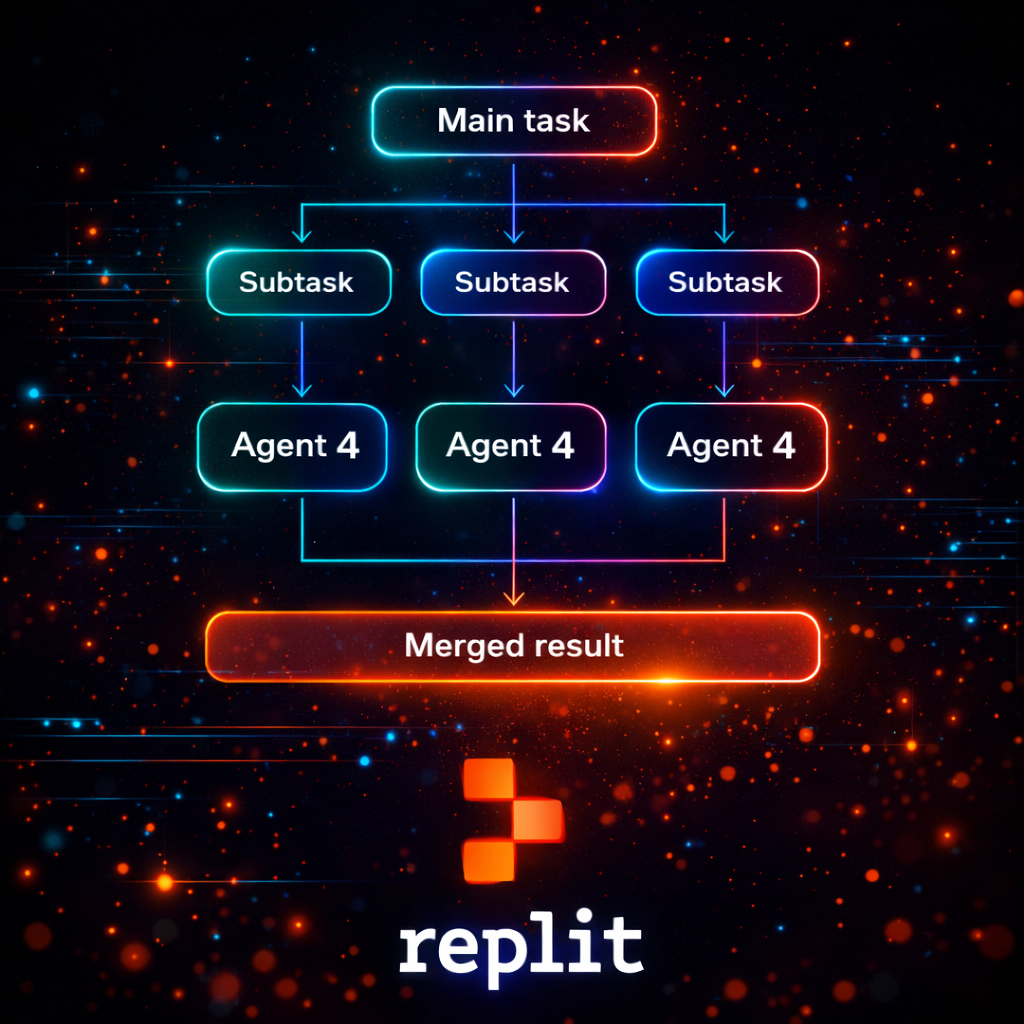
In the video example, Hermes splits a competitor research task across multiple agents: one for OpenAI, one for Anthropic, one for Gemini, and one for Grok.
Business Value: Parallel execution can make complex research workflows faster and more structured, especially when monitoring multiple companies, markets, or sources.
Ready to Build AI Workflows That Actually Save Time?
At Octogamma, we help teams turn AI tools into practical marketing and business workflows — from competitor monitoring and content repurposing to lead research, reporting, and campaign operations. Want to understand which AI workflows can save your team hours every week?
Marketing Use Cases
Hermes is especially useful for marketing teams because many marketing workflows are repetitive, research-heavy, and context-dependent.
Competitor Monitoring
Hermes can monitor competitor websites, blogs, product pages, and pricing pages every day. It can generate a structured report that highlights what changed, why it matters, and what the marketing team should watch.
Content Repurposing
Hermes can turn long-form content into LinkedIn posts, carousel ideas, newsletters, video scripts, summaries, and internal briefs. If it has learned the brand voice, the outputs can become more consistent over time.
Content repurposing other version is to create summaries, format variations and social captions from long-form assets to accelerate content velocity, integrating automation into production pipelines alongside tools like 🔗 Chronicle AI Presentation for slide automation.
Meeting summarisation and action item creation integrated with collaboration tools to accelerate follow-up and execution; this aligns with productivity tools such as 🔗 Granola AI.
Creator and Founder Content
Hermes can analyze existing videos, transcripts, posts, and scripts to understand the creator’s style. Then it can help generate new content in the same tone.
Campaign Research
Hermes can collect market signals, competitor messages, customer pain points, and trend data before a campaign launch.
Lead Research and Qualification
Hermes can research inbound leads, enrich company data, summarize fit, and prepare notes for sales.
Daily Marketing Intelligence Briefs
A team could ask Hermes to send a daily Telegram briefing with:
- competitor updates
- AI tool launches
- relevant industry news
- pricing changes
- social media signals
- new content opportunities
- recommended actions for the day
This is one of the highest-value use cases because it turns information overload into a simple operating rhythm.
How Hermes Works
At a high level, Hermes attaches language models to a toolset and orchestrates decisions through configurable policies and workflows.
- Input interpretation: Hermes receives a natural-language input (user query, webhook, event) and converts it into structured intents.
- Tool selection: Based on intent, the agent selects tools and data sources—APIs, databases, or scripts—needed to fulfil the task.
- Decisioning with guardrails: The agent runs logic through policy checks and constraints to decide which actions to take or whether human approval is required.
- Action execution and logging: Selected tools are invoked and every action is logged for auditability and debugging.
- Feedback and learning: Outputs and outcomes feed metrics that refine prompts, policies and workflow templates over time.
If you operate in a regulated environment, the policy and self-hosting steps are where you must invest in engineering and governance to ensure compliance.
Hermes Open Source AI Agent Alternatives and Competitors
Several projects and products compete with or complement Hermes; selection depends on scale, support needs and integration patterns.
OpenClaw or ex. Molt Bot AI
OpenClaw is a direct competitor that emphasises turnkey automation and pre-built connectors for enterprise systems. It typically targets organisations seeking faster time-to-production with commercial backing; compared with Hermes, OpenClaw may offer a more opinionated, less customised path and stronger vendor SLAs.
Compared with Hermes, Molt Bot prioritises on-device processing and data minimisation; choose Molt when data residency or offline operation is the primary constraint. An overview of that architecture can be seen in 🔗 Molt Bot AI.
Manus AI Agent
Manus AI Agent positions itself as an autonomous workflow platform for enterprises, focusing on end-to-end workflow automation and orchestration. It differs strategically from Hermes by providing a more integrated, productised experience for enterprise customers rather than a community-driven framework. See how this model fits certain enterprise needs via 🔗 Manus AI Agent.
Goose AI CLI
Goose AI CLI is an open-source local agent with CLI-first distribution, aimed at developers building local automation and experiments. Strategically, it is most appropriate for teams that prioritise local development and fast prototyping versus full enterprise orchestration. See practical notes on local agents at 🔗 Goose AI CLI.
Comparison: Hermes Open Source AI Agent vs OpenClaw
| Category | Hermes Agent | OpenClaw |
|---|---|---|
| Type of tool | Open-source self-improving AI agent | Open-source AI agent gateway / assistant access layer |
| Main purpose | Execute workflows, remember context, create reusable skills, and improve over time | Connect AI agents to messaging apps and manage access across channels |
| Core strength | Memory, self-learning, recurring workflow automation | Multi-channel communication and agent routing |
| Best for | Repeated tasks, research, reporting, content workflows, competitor monitoring, personal automation | Using AI assistants from Telegram, WhatsApp, Slack, Discord, iMessage, and other chat apps |
| Memory | Strong persistent memory across sessions | Supports sessions and context, but memory is not the main differentiator |
| Self-improvement | Yes — can create and update skills from completed tasks | Limited / not the core positioning |
| Skills | Creates reusable skills based on previous workflows | Uses tools and agents, but less focused on self-generated skills |
| Always-on use | Can run on a server, VPS, Docker, or cloud setup | Can run as a gateway service on a machine or server |
| Messaging apps | Supports channels such as Telegram, Discord, Slack, WhatsApp, Signal, Email, and others | Strong channel support: Telegram, WhatsApp, Slack, Discord, iMessage, Signal, Teams, WebChat, and others |
| Telegram workflow | Strong use case: send tasks to Hermes and receive reports/files back in Telegram | Strong use case: use Telegram as one of many connected assistant channels |
| Browser control | Can browse websites, extract data, create files, and send outputs | Supports browser-based workflows through connected tools |
| Scheduled tasks | Supports recurring workflows such as daily summaries or monitoring | Supports scheduled/cron-based tasks |
| Multi-agent work | Can split complex work into subagents | Supports multi-agent routing and isolated sessions |
| Content workflows | Strong fit: can learn writing style, analyse content, and reuse learned skills | Possible, but not the main product focus |
| Competitor monitoring | Strong fit: can check websites/blogs daily and generate reports | Possible, but requires more setup around agents and sources |
| Setup complexity | Technical; easier with one-click VPS templates or Docker/server setup | Technical; requires gateway setup and channel configuration |
| Deployment | Local machine, Docker, VPS, cloud, server environments | Local-first gateway, server, daemon-style setup |
| Main risk | Giving an autonomous agent too much tool access without proper permissions | Exposing AI assistants across too many messaging channels without access controls |
Benefits & Risks
Hermes offers material benefits but also exposes firms to operational and governance challenges.
- Benefits: reduced manual work, faster automation cycles, improved traceability and greater control over data flows.
- Risks: data leakage if connectors are misconfigured; drift in agent behaviour without monitoring; reliance on community updates for security patches.
- Operational requirement: firms need processes for change control, observability and incident response to manage agent behaviour and model output risk.
For businesses that handle sensitive data, prioritise private deployment, strict tool permissions and regular security reviews. When to use Hermes depends on whether your organisation can accept a greater internal operational responsibility in exchange for control and cost advantages.
Executive Summary
Hermes Agent is an open-source, self-improving AI agent built by Nous Research. Its strategic value is not only that it can browse, write, summarize, and execute tasks. The real value is that it can remember context, create reusable skills, and run continuously across workflows.
For businesses, Hermes is most useful where work is repetitive, research-heavy, and operationally fragmented. Examples include competitor monitoring, content operations, market intelligence, daily reporting, lead research, and internal workflow automation.
The biggest difference between Hermes and standard AI assistants is persistence. A chatbot helps in the moment. Hermes can become part of the operating system of the business: always available, connected to tools, reachable through messaging apps, and increasingly adapted to the team’s workflows.
However, Hermes is not a plug-and-play enterprise SaaS product. It is open-source infrastructure. To use it seriously, companies need technical ownership around hosting, model access, permissions, security, monitoring, and workflow design.
The best fit is a technical founder, AI-native marketer, operations team, creator, or engineering-led company that wants a self-hosted agent capable of compounding value over time.
Misconceptions and Myths
Mistake: An open-source agent is plug‑and‑play.
Correction: Open-source frameworks provide building blocks, not fully managed solutions; expect integration, configuration and governance work before production readiness.
Mistake: Self-hosting eliminates all privacy risk.
Correction: While self-hosting reduces vendor exposure, risk remains from connectors, misconfiguration and inadequate internal policies; secure design and monitoring are still essential.
Mistake: Language models guarantee correct decisions.
Correction: Models are probabilistic; Hermes requires explicit guardrails, validation steps and human-in-the-loop controls for high-stakes decisions.
Mistake: Community projects lack enterprise maturity.
Correction: Many open-source projects are mature and widely used, but enterprise readiness depends on a firm’s internal processes for maintenance, security and support.
Mistake: Autonomous agents always reduce headcount.
Correction: Agents typically reallocate work: they reduce repetitive tasks but increase the need for oversight, maintenance and higher-value roles that manage exceptions and strategy.
Mistake: All agent frameworks are interchangeable.
Correction: Frameworks differ substantially in integration patterns, governance tools and deployment models; selection should follow a clear mapping to business requirements.
Key Definitions
AI agent
An AI agent is a system that perceives inputs, reasons about goals and takes actions on behalf of users, often combining language understanding with integrations to external systems.
Self-hosting
Self-hosting means deploying software within a company’s own infrastructure or private cloud, providing control over data residency, configuration and security.
Policy guardrails
Policy guardrails are declarative constraints and checks that limit agent actions to approved behaviours and data usage patterns, enabling compliance and safety controls.
Tool connector
A tool connector is an adapter that allows an agent to interact with external systems—APIs, databases, CRMs—so that the agent can retrieve data or trigger actions.
Observability
Observability is the practice of collecting logs, traces and metrics to understand system behaviour, diagnose problems and measure performance.
Human-in-the-loop
A workflow design where humans review, approve or correct automated outputs before final actions are taken, used to manage risk and improve accuracy.
Frequently Asked Questions
Is Hermes suitable for enterprises?
Yes, Hermes can be suitable for enterprises that are willing to invest in integration, governance and self-hosting capabilities. It offers strong audit and policy features, but enterprise readiness depends on internal operational maturity and security practices.
When to use Hermes versus a commercial agent?
Use Hermes when control, customisation and cost effectiveness are priorities and you have engineering capacity to manage deployment and security. Choose commercial alternatives if you need rapid deployment, vendor support and pre-built enterprise connectors.
How complex is implementation?
Implementation complexity varies: prototyping can be quick, but production-grade deployments require work on connectors, monitoring, policy configuration and security, typically needing cross-functional engineering and DevOps support.
What data protection steps are necessary?
Key steps include deploying in private networks, restricting tool permissions, encrypting data in transit and at rest, establishing access controls, and conducting regular audits and threat assessments.
Can Hermes operate offline or on-premises?
Hermes supports self-hosting which enables on-premises or private cloud deployments; offline operation depends on whether language models and required data sources can be hosted locally.
How do I measure ROI?
Measure ROI by tracking time saved per task, error reduction, throughput improvements, and downstream revenue impact (faster sales cycles, improved customer retention). Combine qualitative feedback with quantitative KPIs to build a business case.
Does Hermes replace human staff?
No. Hermes automates repetitive or routine elements, enabling human staff to focus on higher-value activities such as exception handling, strategy and complex decision-making; human oversight remains essential for governance and quality control.